
Analogue lines are closing; the requirement isn't.
Elevator emergency communication is required by the standards. Yet the fixed telephone lines it relies on are steadily being retired, while elevator companies still track hundreds of cars, service visits and faults in scattered records.
- Running a fixed line to every elevator is costly and slow
- Mobile coverage inside the shaft varies
- Maintenance and fault records live on paper or in scattered files
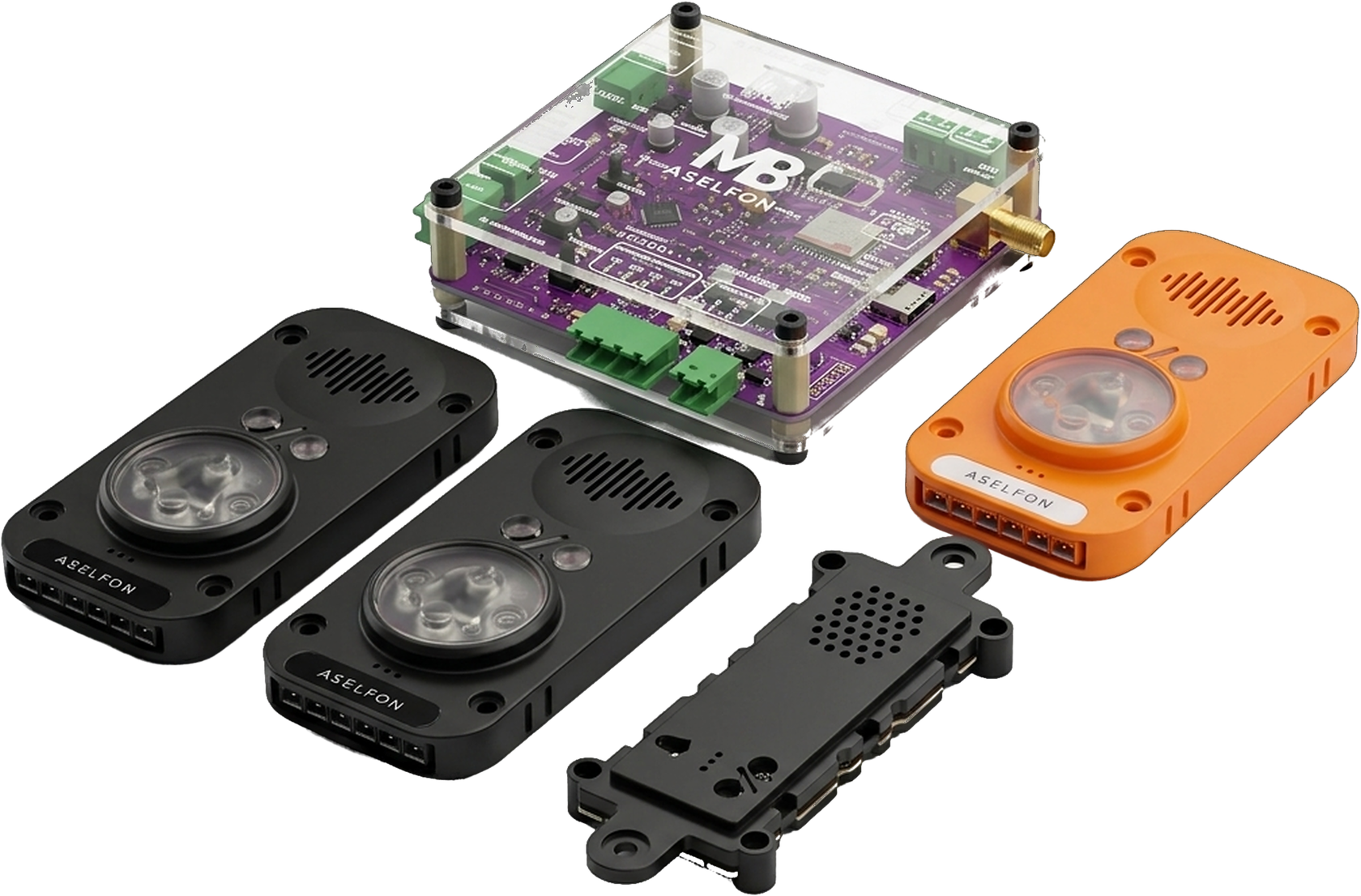
The device in the car, the software in the office; both from one team.
Aselfon M8 places the emergency call; Aselmind runs the maintenance operation.
No fixed line needed
Aselfon M8 places the call over the mobile network. It supports both 2G and 4G, falling back to 2G when 4G weakens.
Standards compliant
Designed to meet the communication requirements of TS EN 81-20 and TS EN 81-28/70.
Two flexible cables
It connects to the car with just two flexible cables and works with panels from different brands.
Maintenance in one place
Aselmind brings maintenance, faults, field teams, building records and reporting together in a web panel and a mobile app.
The products behind this solution.
Each can be used on its own, and they also work together.
Looking at a different area?
Elevator Communication
If your question isn't answered here, write to us and we'll look at your need together.
No. Aselfon M8 places the call over the 2G and 4G mobile network instead of a fixed line. You don't need a separate telephone line for the elevator; the SIM card in the device is enough.
Aselfon M8 is dual-network: when 4G coverage weakens it falls back to 2G and keeps carrying the call.
No. Aselfon M8 can be used on its own as an emergency communication device, and Aselmind on its own as maintenance management software. Used together, car status, call records and the maintenance plan are followed on one screen.
Get in touch.
Tell us what you need and we'll work out together which product — or which custom solution — fits.